Faster and more primitive
At the dawn of the fourth industrial revolution, many of us have front seats to witness the unprecedented impact of AI, automation, and internet of things. We (humans) as a species must be at the top of our game, and still ascending. The infinitive progress is our inevitable destiny, thanks to the expnonentially increasing computation power, mobile devices in every pocket, and the large-scale application of machine learning algorithms. No problem can remain wicked at the hands of deity-like beings like us. Right?
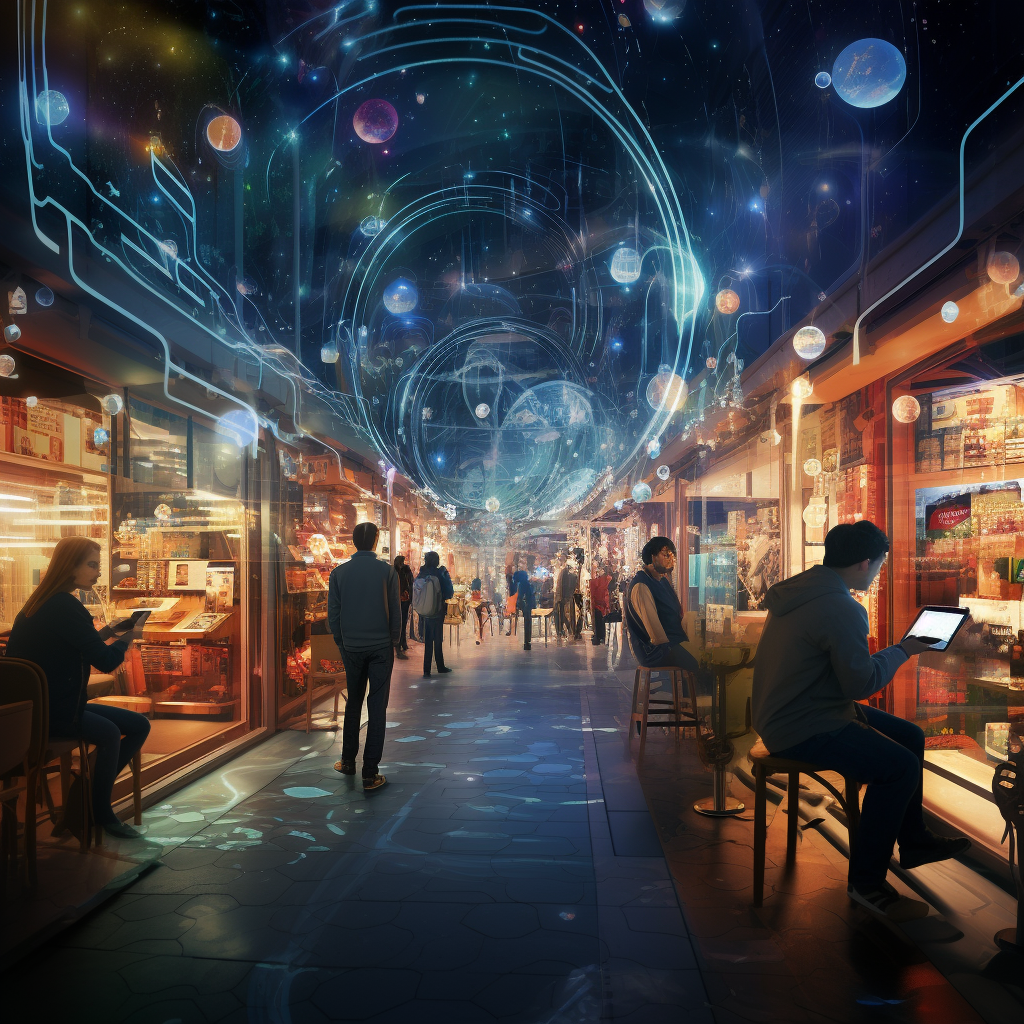
Without a doubt, our information environment has drastically changed. A change per se may not automatically equate to a better – or beneficial – change in the long-term.
I argue against the assumption of humans becoming simply better as a function of technological advancements. Moreover, I believe we are certainly operating faster than ever in this highly complex physical-virtual information environment. By operating faster, I explicitly refer to making multiple (conscious & subconscious) decisions in a shorter space of time than ever before.
This speed of operation might come with a trade-off, though. Imagine the following sequence of events.
You sit on your couch and start reading a book. After a while your smartphone on the table vibrates once. You notice it immediately, pick it up, see and read a message from your friend, and quickly reply to it (most likely with an avalanche of emojis). Now you continue reading the book. Again, your phone vibrates. Some random person has liked your latest Instagram post. You check who it is. Oh, he has posted some intriguing cooking videos! You watch one, two, and… several of them. Now you continue reading. Suddenly your reading is interrupted by a realisation that you might not have an ingredient to prepare that delicious-looking dish that you just a moment ago craved. You decide to check the availability of that specific ingredient in your nearby grocery stores – and Google is happy to serve you.

I am sure you got the point. The trade-off with the speed of decisions is the alterations in our attention span and executive functions.
The Nobel Prize winner, Professor Daniel Kahneman, described in his award-winning book Thinking Fast and Slow two different types of cognitive systems. System 1 represents a super-fast, intuitive, and automatic-like system navigating us effortlessly through this chaotic reality. Why humans survived so many dangerous bottlenecks in the past 200K years? Look no further. System 2 on the other hands is the slow and effortful one. This system is equipped with the capability to evaluate, compute, and infer logical solutions under the spotlight of consciousness.
Which one of the Kahneman’s systems we are utilising more in this contemporary high-velocity information environment? On many occasions, System 1. Why? We are not battling for day-to-day survival in primitive conditions like our ancestors, are we?
The reasons are evident. To simplify, let’s call it biology-driven tech market exploitation.
That phone in your pocket is a direct portal between you and who-/whatever within this massive worldwide network. The applications installed in your phone represent doors of interaction between the parties. Who decides on the rules of opening and closing those doors?
The ones with the keys to understand how captivating the continuous stimulation of our System 1 can be. The keyholders are prepared to exploit every second and turn it into minutes and hours. And you just keep opening the door.
It makes sense for application/software designers to feed you with content that engages maximally, of course! When they capture your attention, frequently and long enough, it creates opportunities for monetisation.
This is naturally not the fault of a single tech enterprise or software company. It’s the state of affairs in the contemporary information environment and prevalent technology ecosystem. The sole availability of suitable technology and the open playing field has led to this development trajectory.
The following question becomes inevitable: is this desirable and sustainable development trajectory for the whole society and humans?
Arguably, internet – and all the connected devices and applications – has the potential to shape our cognition and underlying neurophysiology (Loh & Kanai, 2015; Review). The existing evidence proposes that Digital Natives’ information processing mechanisms have become more rapid and shallow in comparison to the pre-internet era. Distractibility increases and we yearn for short-term rewards more frequently. No wonder the effort of reading books and focusing one’s attention to a single task at time feel more straining!
In the past half-millennium human civilisation has learnt to endorse and even capitalise on its magnificent metacognitive capabilities (i.e. thinking of thinking). Thanks to various revolutionary philosophers, mathematicians/logicians, natural scientists, and authors – our inner worlds have been provided with lenses uncovering a whole new reality, as well as possible realities, around us. Our power of imagination needs to be mindfully stimulated in order to remain potent and flourishing also in the future.
Hence, we may choose to change the roles of master and servant when it comes to the relationship between technology and our behaviour. We may choose to become better, not just faster. Thinking slow too.